What to see here
Pelkor Chode stands on the west side of Gyantse, built in the fifteenth century, and is one of the rare houses in Tibet where several schools shared one site — Gelug, Sakya and Kagyu each kept a college here, practising separately under no single authority. That arrangement is unusual elsewhere and is much of the interest.
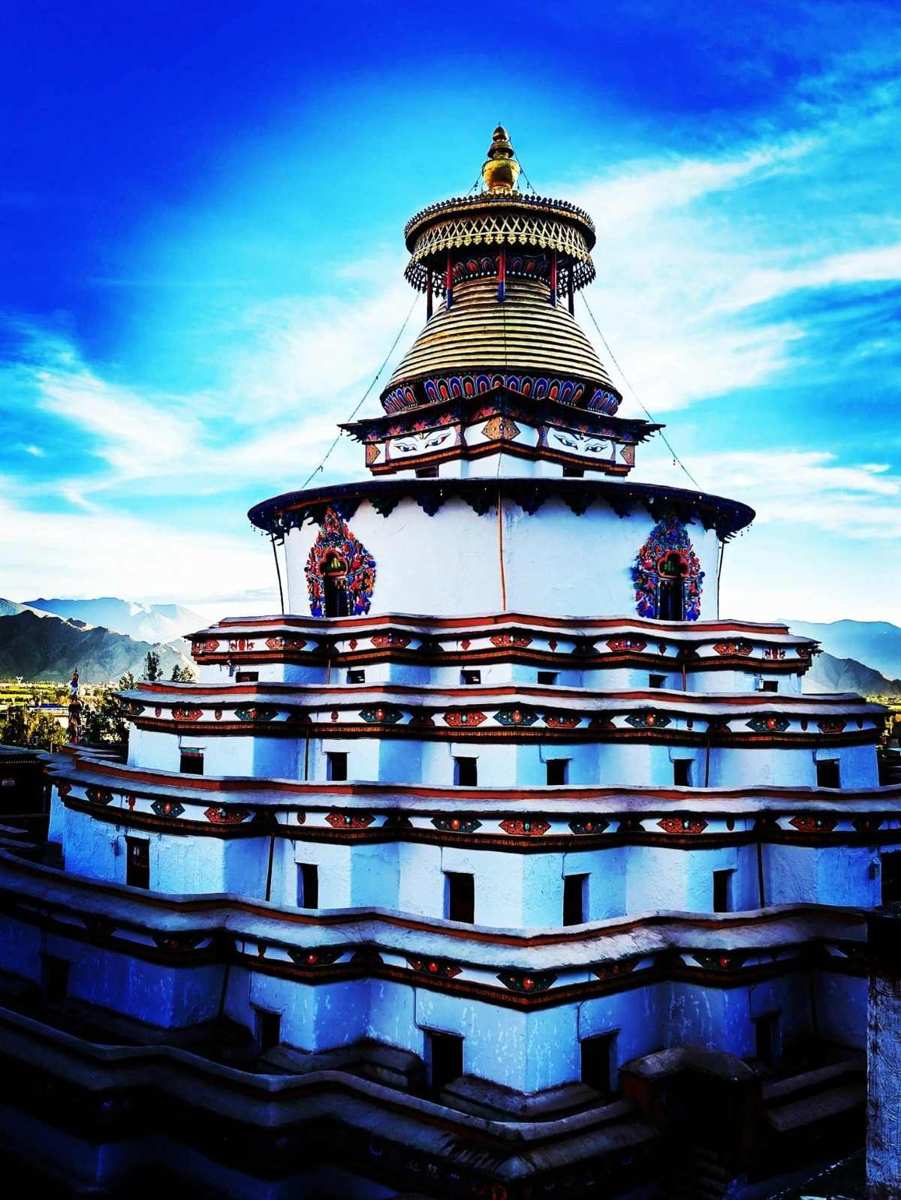
The Kumbum, the stupa of a hundred thousand images, is what people come for. Nine storeys, white, stepping inward to a gilded crown and parasol, with more than a hundred small chapels opening off the tiers, each holding different statues and murals. Climbing it is like walking through a three-dimensional gallery.
The murals are the monastery's real weight. Subjects run from the Buddha's previous lives to lineage masters and mandalas, the colours deep and the drawing fine, many of them early and well preserved. Bring a small torch: the interior is very dark.
The story behind this place
The stupa was built by Rabten Kunzangpak, a local ruler of Gyantse. Tradition says he commissioned it for the merit of his father and the work took close to ten years; by the time it stood, Gyantse was a trading town of Tsang and passing caravans came to light a lamp.
The other story counts the statues and murals inside and arrives at the round figure of a hundred thousand, which is where the name comes from; others say it means simply a great many. Either way, after nine storeys and a hundred chapels the name earns itself.
Driving there and visiting
Pelkor Chode is inside Gyantse, ten minutes on foot from the dzong, with a car park at the gate where a foreign-plate car can stop. About five hours from Lhasa, ninety minutes from Shigatse.
- Buy the ticket at the gate, real-name on your passport. Most murals may be viewed, no flash, and some chapels forbid photography entirely.
- The climb goes tier by tier; steps are narrow and dark — grippy shoes and a torch. Skip it if heights bother you.
- Chapels are small. Queue when it is busy and do not sit long inside holding a place.
- Hats off, no noise inside, do not touch statues or offerings; walk clockwise.
- It is windy at the top: stay inside the railings and do not climb on the crown or parasol.
- Do the stupa and the dzong with an hour between them — climbing both back to back is too much.
Pairing it with nearby stops
Pelkor Chode and the dzong make one pair: the stupa and murals in the morning, the climb after lunch, the valley at dusk. Short of time, take one — the monastery for the painting, the dzong for the panorama.