What to see here
Rakshastal lies west of Manasarovar, the two separated only by a low ridge, at 4,574 m. It is salt water, undrinkable and useless for irrigation, which is where the name comes from — the Tibetan means “the black poisonous lake”.
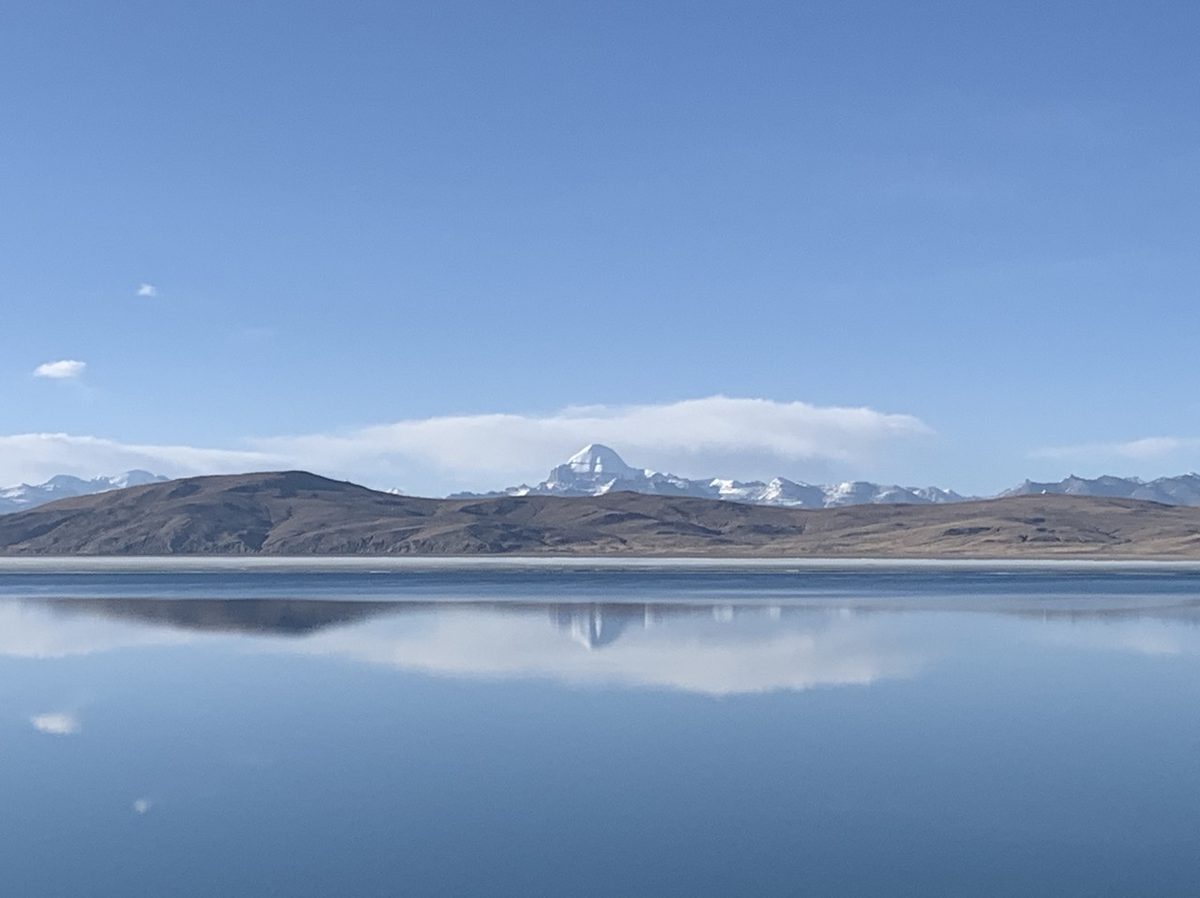
The lake is long and narrow, dark red hills on the west shore, shingle on the east, the wind constant, and the water often so blue it reads black. In clear weather the east side gives a reflection of Kailash, the shot photographers come for.
Seen together the pair is the point: the sacred lake fresh, the ghost lake salt; one circled and drawn from, the other avoided even by livestock. From the ridge between them, one sheet of water is warm blue and the other heavy blue — a comparison plainer than any explanation.
The story behind this place
Two local explanations sit behind the name. One says there are no fish and no weed in the lake and animals that drink fall sick, hence the black poisonous water; the other says a demon lives beneath it and the wind raises waves, so travellers would not spend a night on the shore.
A third story holds that the two lakes were once one, split by a mountain deity with the ridge, half becoming sacred and half ghost; on certain Tibetan dates a channel between them opens, which locals call the meeting of the lakes.
Driving there and visiting
From Hor or Barga toward Burang the lake is visible from the road. A dirt track on the east side gets close to the shore and a foreign-plate car can take it, though the surface is soft — do not stray far from firm ground.
- The wind is extreme: tripods blow over, so use a fast shutter or weight the legs, and hold on to your hat.
- No supplies, no toilets, no signal at the shore. Fill up and carry water at Hor before you leave.
- Do not drive onto the shingle — soft sand and pebbles trap the car. Park on the hard shoulder.
- The water is undrinkable and not for washing anything. Watch children near the edge.
- Weather turns fast: when cloud drops, get back in the car. Do not linger on the open shore in a thunderstorm.
- Pair it with the sacred lake; the ridge between them shows both — do not park there blocking the road for long.
Pairing it with nearby stops
The ghost lake and the sacred lake make one outing: sunrise at Manasarovar from Hor, over the ridge for the noon blue of Rakshastal, back for the Gurla Mandhata reflection at dusk. Half a day to a day, well paced.